
India's overall retail inflation eased to 4.41 per cent in September, helped by falling commodity prices, but rural inflation was at 5.05 per cent

The fragmentation of politics and the pressures of coalition management have contributed to a near-secular rise in budgetary social expenditures and spending on subsidies since 1991, leaving little fiscal space for government-led capital investment.

Udaan - India's largest business-to-business (B2B) e-commerce company - has laid off about 180 employees, or 4-5 per cent of its workforce of 4,000, in a move to drive cost efficiency, revealed sources. They said the layoffs have happened across various department functions. The layoffs have happened at a time when the Bengaluru-based firm is trying to turn into a publicly listed entity in 18-24 months.

The United Kingdom extracted USD 64.82 trillion from India over a century of colonialism between 1765 and 1900 and USD 33.8 trillion of this went to the richest 10 per cent -- enough money to carpet London in notes of 50 British pound almost four times over.

'The focus needs to shift towards the ability to collect payments, particularly in tier-3 to tier-4 areas where acceptance is still lacking.'

Hindustan Unilever Ltd on Friday reported a 1.08 per cent increase in consolidated net profit at Rs 2,508 crore in the third quarter ended December 2023. The company had posted a consolidated net profit of Rs 2,481 crore in the same quarter last fiscal, Hindustan Unilever Ltd (HUL) said in a regulatory filing. Its revenue from sales of products was marginally down to Rs 15,259 crore during the quarter.

The previous best selling year was 2010 when Maruti managed to sell around 10.6 lakh (1.06 million) units.

Maruti Suzuki India said its domestic sales rose 10.6 per cent in May.

The external environment has worsened further. While the Finnish economy entered into a recession, Swedish economic growth also dipped. The Finnish gross domestic product (GDP) dropped 0.6 per cent in October-December, 2022. It was the second quarter of negative growth, which is a technical definition of recession.

Pegging the growth of the Indian television market at about 10 per cent in the next five years, Philips India on Thursday said the biggest growth markets for TVs would be smaller towns and rural areas.

Trade generic drugs (medicines that are sold directly through distributors) are fast becoming a key segment for domestic pharma firms as volume growth slows in the overall market. Big companies like Cipla and Alkem have a significant presence in the segment but recently, players like Torrent Pharmaceuticals and Dr Reddy's Laboratories (DRL) have also entered this market. What is driving big pharma's focus on trade generics? The volume growth in the Indian Pharma Market (IPM) has come down from 5.6 per cent in FY16 to 0.1 per cent in FY23.

From Dabur to HUL, here are 10 stocks with significant rural exposure in the auto, agri-chemical and fast moving consumer goods sectors, which should see an uptick in sales growth.

With a revival in demand and consumption, FMCG companies are looking forward to 2022 with positivity and hopes of sustaining a healthy growth trend across both rural and urban markets while gearing up to cater to the ever-increasing digitally active consumers and tackle the challenge of higher commodity prices. Health and wellness and convenience are going to remain key trends and FMCG companies are strengthening their core brands, driving premiumisation across their portfolios with targeted innovations as consumers are gravitating towards trusted brands looking for quality, purity and hygiene, in continuation of the trend that started since the pandemic last year. FMCG makers are accelerating digitalisation and are investing in building capability in e-commerce and Direct-to-Consumer channels, identifying it as a key vector of their growth as the threat of a possible third wave is still not away.

Experts tell Ujjval Jauhari that investors need to be careful in picking stocks given high valuations and with markets possibly ignoring potential risks

The nearly Rs 15,000-crore India unit of Coca-Cola derives the bulk of its revenue from its core business of selling cola drinks

These consistent performers are expected to maintain momentum.

'We expect the bull run to continue until economic growth continues.'

With Onam and Raksha Bandhan just around the corner, the festival season is ready to kick off in full swing. As people embrace the celebratory spirit, companies anticipate a surge in sales this year. Consumer durables firms are expecting strong growth of 40-50 per cent in the premium segment during the upcoming season. Appliance makers also foresee increased demand for cooling appliances - refrigerators and air conditioners - which were impacted by unseasonal rainfall.

India's electric two-wheeler (E2W) sector is expected to cross the one million mark in 2024 fuelled by rising demand, increased production, and affordability, industry experts said, even as several original equipment makers are expanding their penetration to rural areas. Improved battery technology and innovative features are also likely to fuel growth, they said. "E2W sales will breach the 1-million mark in 2024 as the demand for electric two-wheelers is expected to continue growing due to factors such as environmental awareness, government incentives, and improvements in technology," Hyder Khan, chief executive officer (CEO), Godawari Electric Motors, said.

The FMCG sector is generally considered to be a safe haven during difficult times as people never stop buying soap and toothpaste. However, weak rural and semi-urban demand has been a factor since the lockdowns of 2020-21 while rising inflation has also impacted margins. While the FMCG majors have survived on the basis of price hikes and good management practices, they have seen growth slowdowns and experienced margins being squeezed as raw materials and transport costs rose. The FMCG sector witnessed positive volume growth in the fourth quarter of the 2022-23 financial year (Q4FY23) after five consecutive quarters of decline, and the rebound in demand was led by urban markets.

This is a good opportunity for long-term investors to pick quality small and midcap stocks at reasonable valuations.

Moody's Investors Service on Tuesday slashed India's growth forecast for the current financial year to 9.3 per cent saying that the second wave of coronavirus infections hampers economic recovery and increases risk of longer-term scarring. Moody's, which has a 'Baa3' rating on India with a negative outlook, said obstacles to economic growth, high debt and weak financial system contrain sovereign credit profile. The US-based rating agency had in February forecast a 13.7 per cent economic growth for the current fiscal (April 2021-March 2022).

Companies from the capital goods space will under-perform.

'The fiscal pressure will be there, but the intent of the government behind this move is to spur demand and growth.'

The BJP still does not have a majority in Upper House of Parliament, the Rajya Sabha, and this will pose hurdles to the party's legislative reform agenda

HMSI is the biggest player in scooter market with a share of 60 per cent

'It is a balanced and prudent Budget that sets the foundation for future growth in the economy.'

ITC Ltd on Friday reported a 23.09 per cent increase in consolidated net profit at Rs 5,070.09 crore for the third quarter ended December 2022, helped by growth momentum across its operating segments. The diversified company had posted a net profit of Rs 4,118.80 crore during the October-December quarter of the previous fiscal, ITC said in a regulatory filing. Its revenue from operations was up 3.56 per cent to Rs 19,020.65 crore during the quarter under review, as against Rs 18,365.80 crore in the corresponding period of the previous fiscal.
Target prices around Rs 400 suggest a significant upside.

As markets enter the new financial year and the long-term capital gains tax on the sale of stock investments kicks in, Abhinav Khanna, head of equities, Citi India, tells Puneet Wadhwa that he remains optimistic on the medium-to-long term growth of India, led by consumption recovery and the green shoots visible in the capex cycle.

As the second wave of the Covid-19 pandemic abates, India's automakers are hopeful of a quick recovery in sales volumes, led by better rural sentiment, low interest rates, improved availability of finance and a gradual uptick in business and economic activity. In fact, companies have started to ramp up production already, encouraged by high order books and the growing preference for private transport in both rural and urban areas as a means to avoid infections. In early April, the industry had been bullish as the sales trend for March showed that the effects of the Covid-19 pandemic had been left behind. The total vehicle sales had grown by 77 per cent, albeit on a lower base, and for the past few months, sales had consistently touched 300,000 units per month.
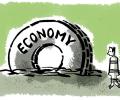
Moody's Investors Service on Friday projected India's growth at zero per cent for the current fiscal and said the negative outlook on sovereign rating reflects increasing risks that GDP growth will remain significantly lower than in the past. The outlook also partly shows weaker policy effectiveness to address economic and institutional issues, it noted in the update to its November 2019 rating forecast.

The demand for gold is expected to take a hit if the price of the yellow metal - which has been hovering around Rs 60,000, a level never seen before - remains elevated. Due to a sharp increase in price in a very short time and the flow of smuggled gold continuing, gold price in Mumbai is quoted at around Rs 59,000 per 10 gram. Typically, overall demand in the January-March and July-September quarters is moderate-to-dull, which is the case in the ongoing period.

Aggressive rate hikes by the US Federal Reserve could result in a flight of capital from emerging markets like India, says B Gopkumar, chief executive officer, Reliance Securities.

Hindustan Unilever (HUL), one of the country's largest fast-moving consumer goods (FMCG) players, is learnt to have cut prices of its leading soaps and detergents this month by 2-19 per cent, according to the company's distributors. The cuts come after consistent price increases by the company as well as its peers, following the sharp rise in raw material prices in the past several months. It is only recently that prices of raw materials have started to correct from peak levels in the June quarter.

For the first time in the history of Budget-making in India, a single Budget will touch 65 crore Indians, says Shailesh Haribhakti.

'India's economy is growing faster compared to the developed economies of the world.' 'More importantly, it is growing faster compared to most of the developing economies.' 'The monsoon is not the only thing that drives the rural economy and certainly not the national economy.' 'It is too simplistic to reduce everything to the monsoon.'

Whether it was the MGNREGS or the NFSA or the Aadhaar-based DBT scheme for cash transfer, the Modi government has built on the basic architecture created by the Singh government. Policy makers in the Modi government, instead of discarding them as products of the previous political regime, worked on them, expanded their scope and reach, and used new tools to improve their performance, explains A K Bhattacharya.

The third-quarter financials didn't excite market watchers. But equity investors can still make money if they invest in the right stocks.

The biggest two-wheeler market in the world is -- of course -- India. Guess who are the gainers? Yamaha and Honda.
